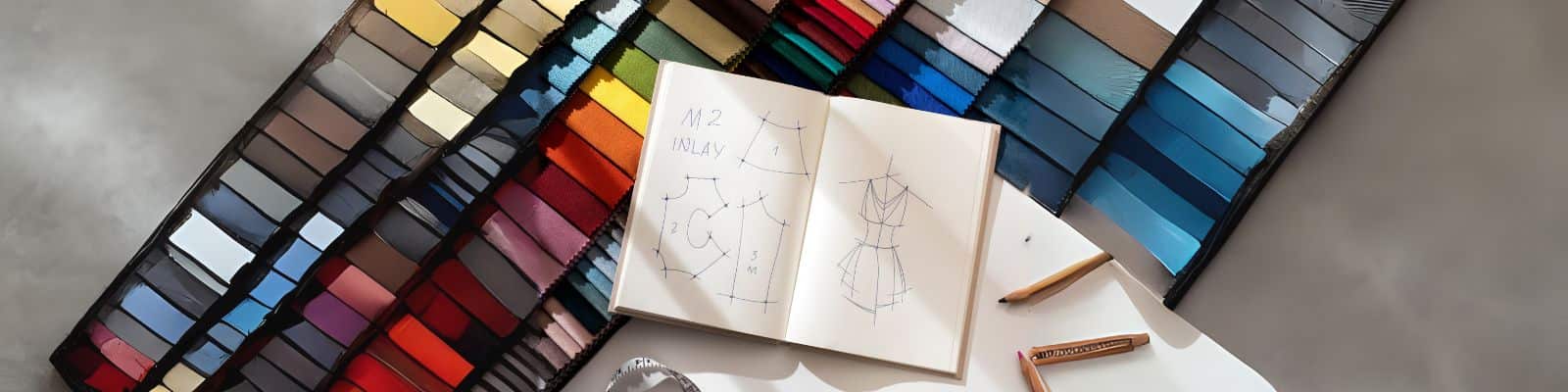
In my years working with garment production, I have seen how washing has transformed the ready-made garments industry just by adding real character, comfort, and visual depth to woven and knit apparel. Today, washing is not just a finishing step, it is a core design technique that shapes how clothing looks, feels, and performs, especially when quality matters at scale.
From factory floors to sampling rooms, it plays a major role in styles like streetwear, retro, and motorbike suits, where soft, comfy textures meet bold, faded, worn-in, and vintage effects. I have personally seen the right wash actually turn a basic garment into an elite piece, which is why this guide will break down the most common garment wash types you should consider for your upcoming drop.
Garment Wash Types and their Uses
| Wash Type | What It Does | Best For |
|---|---|---|
| Acid Wash | Uses chemical treatment to create high contrast, uneven fading with a distinctive pattern | Retro t shirts, statement streetwear, 80s and 90s inspired styles |
| Sunfaded Wash | Replicates natural sun exposure to achieve soft, uneven fading | Vintage streetwear, relaxed fit tees, casual hoodies |
| Stone Wash | Tumbles garments with stones to soften fabric and create a worn texture | Denim, heavyweight cotton, rugged casualwear |
| Enzyme Wash | Removes surface fibers using enzymes, resulting in a smoother and softer feel | T shirts, fleece garments, everyday basics |
| Stone Enzyme Wash | Combines stones and enzymes for controlled abrasion and improved softness | Premium denim, heavyweight cotton apparel |
| Garment Wash | Uses water and softeners to relax fabric and remove stiffness after stitching | All garment types for comfort improvement |
| Pigment Wash | Applies pigment dyes to create washed out, vintage tones with uneven depth | Vintage tees, washed hoodies, lifestyle streetwear |
| Garment Dye Wash | Dyes the fully stitched garment, creating rich color depth and tonal variation | Muted color palettes, tonal collections |
| Snow Wash | Produces a frosted, lightly bleached effect with soft highlights | Denim, washed tees, fashion focused streetwear |
| Marble Wash | Creates swirling, marble like patterns through chemical processing | Statement garments, bold fashion pieces |
| Distressed Wash | Enhances a naturally worn and aged appearance while softening the fabric | Streetwear, workwear inspired apparel |
| Destroy Wash | Aggressive washing combined with abrasion for a heavily worn look | Grunge styles, edgy streetwear |
| Bio Wash | Eco friendly enzyme treatment that improves softness and reduces fabric fuzz | Cotton garments, sustainable fashion lines |
| Silicone Wash | Applies silicone softeners for a smooth, silky hand feel and improved drape | Premium streetwear, elevated casualwear |
| Bleach Wash | Lightens fabric color using controlled bleaching for strong contrast | High impact streetwear, graphic t shirts |
| Vintage Wash | Uses a combination of wash techniques to create an authentic aged finish | Heritage styles, retro inspired collections |
Acid wash
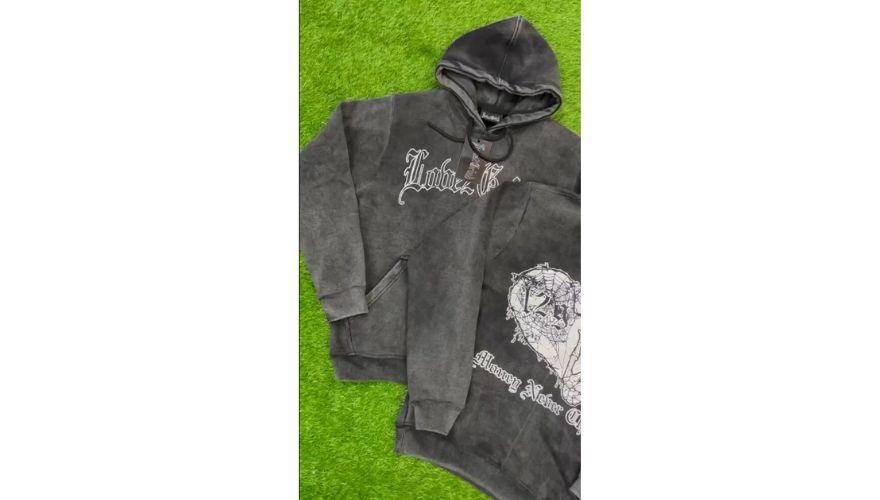
Acid wash is a chemical garment washing technique designed to create bold, high-contrast, and marbled patterns on apparel, especially cotton and denim. It uses chemicals like chlorine or potassium permanganate, either sprayed directly onto the fabric or added during the wash, to selectively remove color from the garment surface.
The process is carefully controlled so the chemicals lighten areas of the fabric without weakening it too much. The longer the treatment or the stronger the chemical, the more dramatic and lighter the faded patches become.
It’s one of the most popular wash types among clothing brand owners and their customers. Not gonna lie, it’s my favorite too! If you’re thinking about adding a wash to your next apparel drop, start with acid wash, it can turn simple pieces into premium looking ones.
Sunfade wash
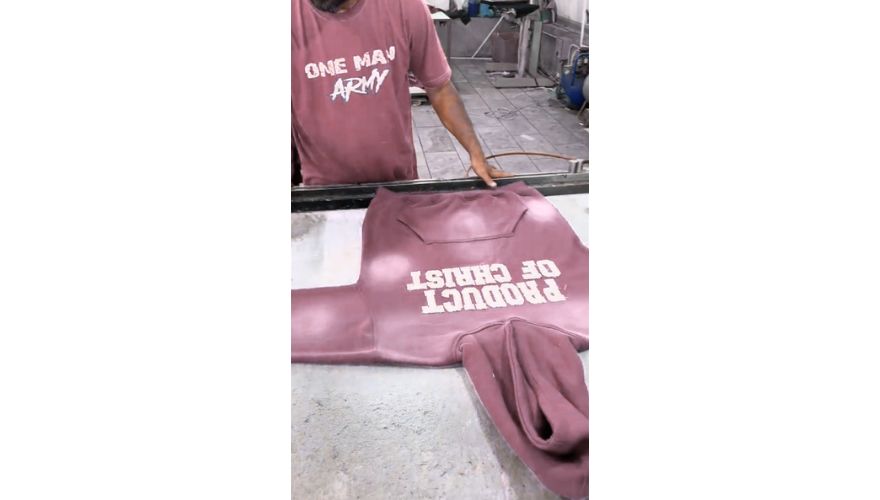
Sunfaded wash is a another apparel washing technique designed to replicate the natural fading effect of prolonged sun exposure. Since achieving this naturally isn’t practical in factories, the effect is created using controlled sunfade wash methods, including spray techniques, heat treatment, or mild bleaching, which selectively lighten areas of the fabric to create soft, worn-in color variations.
This process works especially well on cotton and cotton-blended fabrics, like those commonly exported from Pakistan (80% cotton, 20% polyester), which are used for t shirts, hoodies, and casual streetwear. The result is a vintage, nostalgic, and slightly uneven color fade that adds character and a lived-in look to the garments.
Stone wash
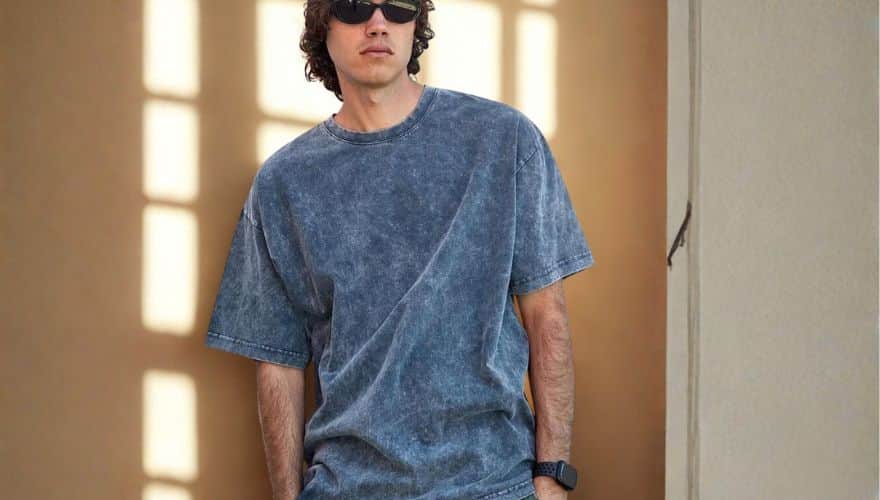
Stone washing is a physical washing technique where garments are washed with pumice stones to create a faded, worn in appearance, especially on hoodies. During the process, clothes are soaked at a controlled low water level so the stones can rub effectively against the fabric surface.
Inside the washing tank, the garments and stones rotate together, and the longer this action continues, the lighter the color of the fabric becomes. This creates strong contrast and a distinctive vintage effect that works perfectly for streetwear drops.
Different materials can be used in the process, including yellow stone, white stone, AAA stone, artificial stones, and even rubber balls, each producing a slightly different washing result. For your next apparel drop, stone washing is worth trying if you want that authentic worn in look.
Destroy wash
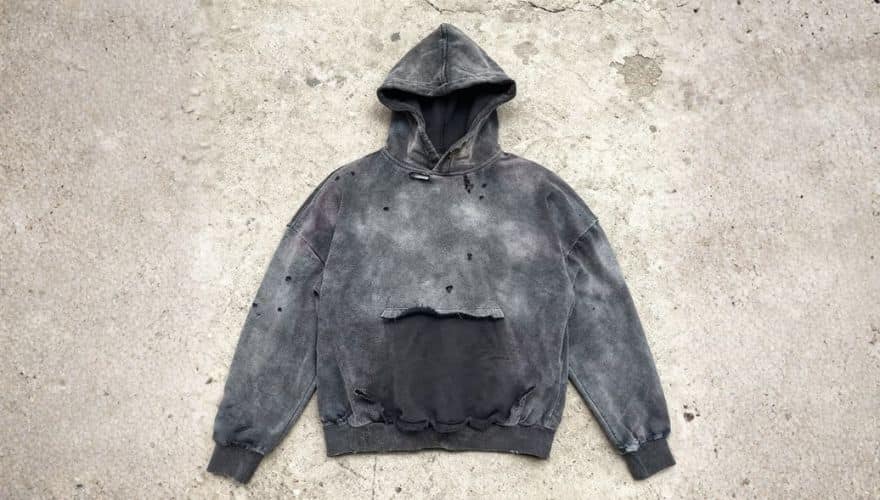
Destroy wash is a bold treatment in the garment world where fabric is intentionally damaged to create a rough, broken look. Unlike a simple stone wash, this process may combine heavy abrasion, enzyme treatment, and manual distressing to create rips, frays, and strong faded areas.
It is widely used in streetwear, retro, and motorcycle-inspired collections where brands want that worn-in, rebellious energy. Destroy wash is not random damage, it is controlled engineering.
Placement of tears, reinforcement behind stress points, and fabric selection all affect how the clothing will perform after multiple washes.
Enzyme Wash
Enzyme wash is a chemical garment washing technique that uses cellulase enzymes to gently break down the fiber structure of cotton or blended fabrics (typically 80% cotton, 20% polyester). This controlled action creates a soft, subtle fading effect on the fabric surface while keeping the garment strong and durable.
The process also removes unwanted fuzz or hairiness, leaving the fabric with a smooth, soft “peach skin” feel that lasts even after multiple washes. It’s a perfect choice if you want your t-shirts, hoodies, or sweatshirts to feel luxuriously soft.
Stone Enzyme Wash
Enzymes can be used alone or combined with stones in a process called enzyme stone wash, which adds a faint worn-in texture along with the soft fading effect.
Garment Wash
Ordinary washing is basically the same process we use at home, just done on an industrial scale. Garments are washed in large machines using warm water, usually between 60 – 90°C, along with a controlled amount of detergent.
After 15 minutes of washing, the clothes are rinsed and often treated with softener, which helps make the fabric feel softer, more comfortable on the skin, and visually cleaner for everyday wear.
Depending on the washing time and the amount of chemicals used, it is commonly divided into three types, light wash, normal wash, and heavy wash. Light washing typically lasts about 5 minutes, normal washing around 15 minutes, and heavy washing up to 30 minutes.
These timings are flexible, and there is no strict boundary between each method. This wash gives your apparel a natural finish that works well for basics.
1. What are the different types of garment washing?
Garment washing includes acid wash, sunfaded wash, stone wash, enzyme wash, stone enzyme wash, pigment wash, garment dye wash, snow wash, marble wash, distressed wash, destroy wash, bio wash, silicone wash, bleach wash, and vintage wash. Each technique changes the texture, color depth, softness, and overall appearance of the garment.
Which wash is best for streetwear brands?
For streetwear, acid wash, destroy wash, stone wash, and sun fade wash are the most popular. These create faded, worn in, and bold effects that make basic pieces stand out.
What is the difference between stone wash and enzyme wash?
Stone wash uses pumice stones for physical abrasion and a rugged faded look. Enzyme wash uses cellulase enzymes to soften fabric and remove surface fuzz without aggressive damage.
Does garment washing affect fabric quality?
Yes, if not controlled properly. A well managed wash improves softness, comfort, and drape. Poorly controlled washing can weaken fibers, reduce GSM strength, and cause uneven shrinkage.
Can you combine multiple wash techniques?
Yes. Many premium garments use combination treatments like stone enzyme wash or pigment wash followed by enzyme finishing to achieve both texture and softness.